
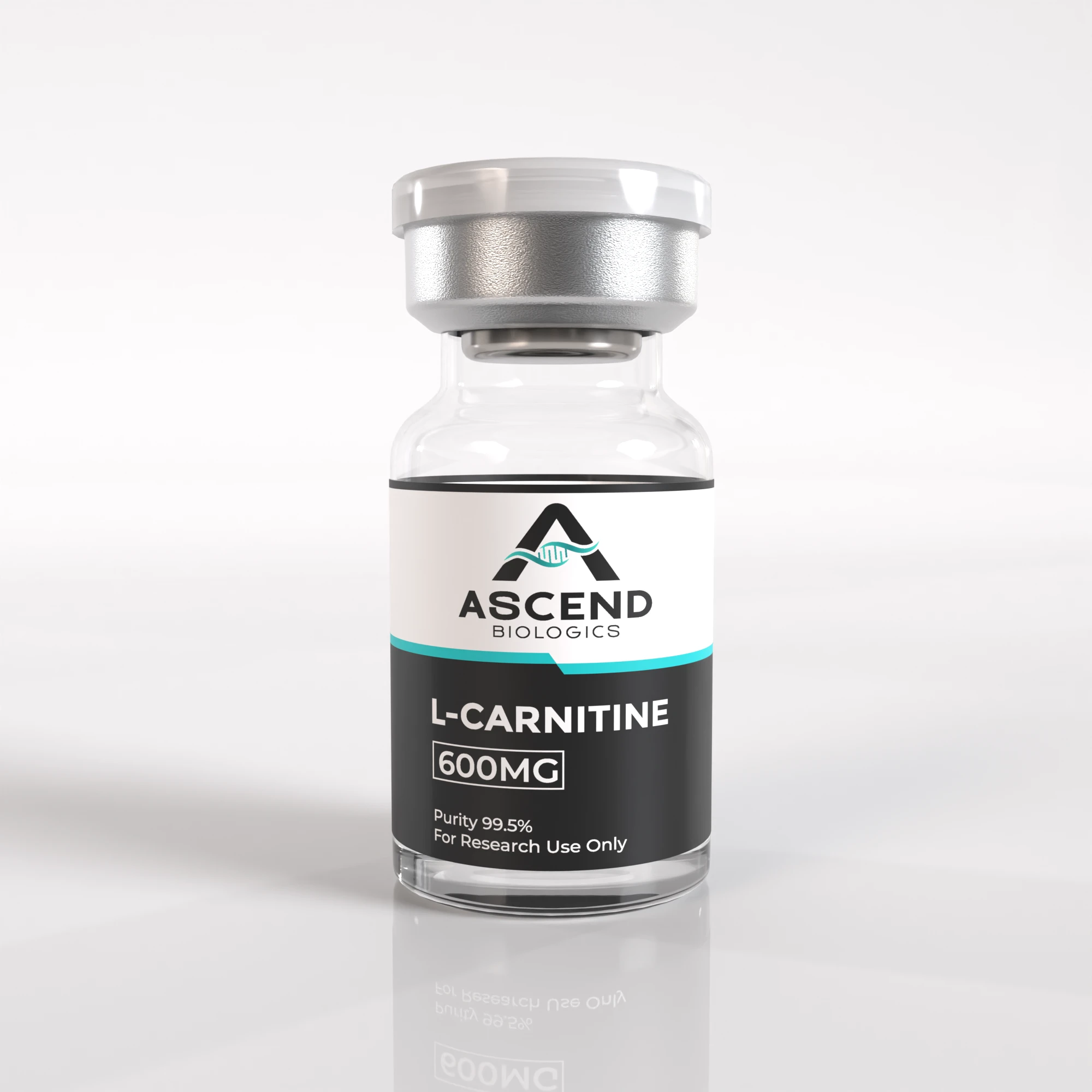

L-Carnitine 600MG
L-Carnitine is a naturally occurring amino acid derivative primarily synthesized in the kidneys and liver of mammals, including humans. It plays a critical role in mitochondrial function, facilitating the transport of long-chain fatty acids into mitochondria for energy production. In the research community, L-Carnitine has been extensively studied for its potential physiological effects in various biological systems.
Research Context
L-Carnitine is a key metabolite in lipid metabolism, serving as a cofactor in the process of beta-oxidation, which breaks down fatty acids into acetyl-CoA. Research in preclinical models has explored its role in mitochondrial biogenesis, cellular energy homeostasis, and antioxidant defense mechanisms. Given its biochemical significance, L-Carnitine has been investigated in contexts ranging from metabolic health to neurodegenerative research, though its effects are highly dependent on concentration, dosage, and experimental conditions.
Research Overview
L-Carnitine has been studied in multiple research settings, including animal models and cell cultures, to elucidate its biochemical properties. Early investigations focused on its role in fatty acid metabolism and energy production. More recent studies have examined its potential neuroprotective effects, its impact on mitochondrial dynamics, and its influence on oxidative stress responses. These studies are primarily conducted in controlled laboratory environments to isolate and analyze specific physiological pathways.
Key Research Focus Areas
- Fatty Acid Transport and Oxidation: Research has demonstrated that L-Carnitine enhances the transport of long-chain fatty acids into mitochondria, improving metabolic efficiency. Studies have explored its effects on lipid metabolism in both healthy and diseased states, including conditions like diabetes and obesity.
- Mitochondrial Function and Biogenesis: Investigations in animal models have examined how L-Carnitine influences mitochondrial biogenesis and respiratory function. It has been studied in relation to aging, exercise performance, and conditions associated with impaired mitochondrial activity.
- Neuroprotection and Neurodegeneration: L-Carnitine has been investigated for its potential neuroprotective effects, particularly in models of neurodegenerative diseases such as Parkinson’s and Alzheimer’s. Research focuses on its role in reducing oxidative stress, supporting neuronal energy supply, and modulating synaptic function.
- Antioxidant and Anti-Apoptotic Effects: Studies have explored L-Carnitine’s ability to mitigate cellular oxidative damage and promote cell survival through its interactions with antioxidant pathways. This research often involves exposure to stressors such as hypoxia or metabolic stressors.
- Metabolic and Endocrine Regulation: L-Carnitine has been studied in relation to insulin sensitivity, glucose metabolism, and hormonal balance. Research in this area includes its effects on pancreatic beta-cell function and systemic energy homeostasis.
- Cardiovascular and Cardioprotective Effects: Preclinical studies have examined L-Carnitine’s role in cardiac health, including its effects on myocardial function, ischemia-reperfusion injury, and the prevention of metabolic syndrome-related cardiac complications.
This product contains L-Carnitine in a purified form, suitable for research applications involving biochemical, cellular, or molecular biology studies. Due to its biochemical properties, L-Carnitine is often utilized in experiments examining metabolic pathways, mitochondrial function, or stress responses. Always consult the appropriate academic or institutional guidelines for compliance with research regulations specific to your institution.
For research use only. Not for human or animal consumption.


Reviews
There are no reviews yet.