
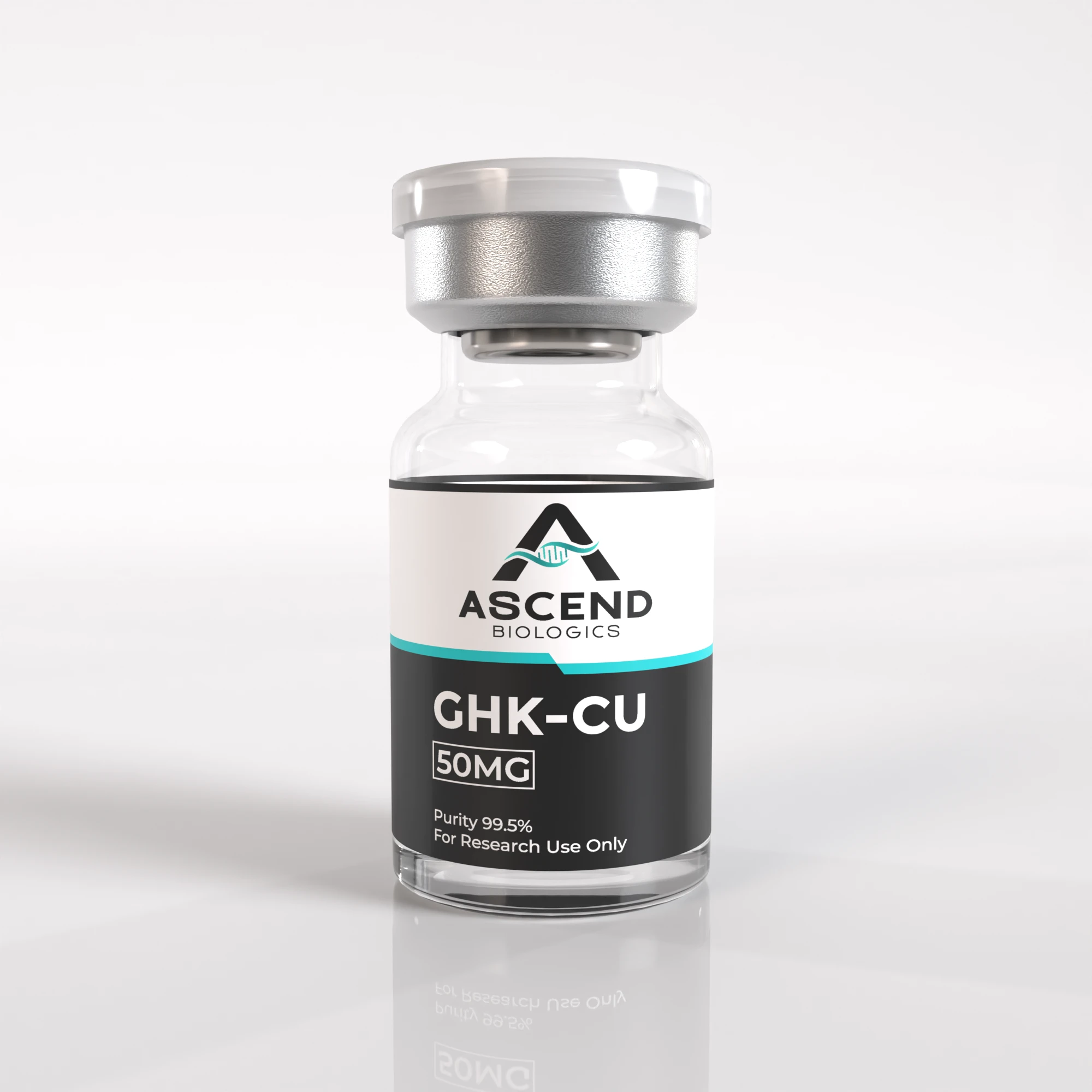

GHK-Cu
GHK-Cu, or Glycyl-L-Histidyl-L-Lysine-Copper, is a peptide complex widely studied in the scientific community for its potential biological activities in research settings. This compound is a naturally occurring peptide found in human serum and has been explored for its potential effects on cellular and extracellular matrix interactions, though it remains strictly intended for research purposes only.
Research Context
GHK-Cu has garnered significant attention in academic and scientific circles due to its proposed role in modulating cellular processes. Historically, it has been studied for its potential effects on wound healing, extracellular matrix remodeling, and anti-inflammatory responses. Research findings have indicated its involvement in processes such as fibroblast activity and collagen production, although the exact mechanisms and implications require further investigation.
Research Overview
GHK-Cu is primarily synthesized to mimic its native presence in human blood plasma. Its research applications have included investigations into skin repair, cellular interactions, and potential therapeutic implications in wound healing models. In vitro and in vivo studies have explored its stability, bioavailability, and cellular uptake, laying the foundation for further mechanistic investigations.
Key Research Focus Areas
- Extracellular Matrix Remodeling
- Cellular Uptake and Bioavailability
- Potential Anti-Inflammatory Effects
- Wound Healing Mechanisms
- Stability and Degradation Kinetics
Safety and Compliance Statement
GHK-Cu is provided for research use only and is not intended for any therapeutic, diagnostic, cosmetic, or human or animal consumption applications. Users must adhere to all applicable regulatory guidelines and comply with local laws governing research materials. Proper documentation and handling procedures should be followed to ensure compliance with research ethics and safety protocols.
For research use only. Not for human or animal consumption.
| Size | 100MG, 50MG |
|---|
Reviews
There are no reviews yet.