
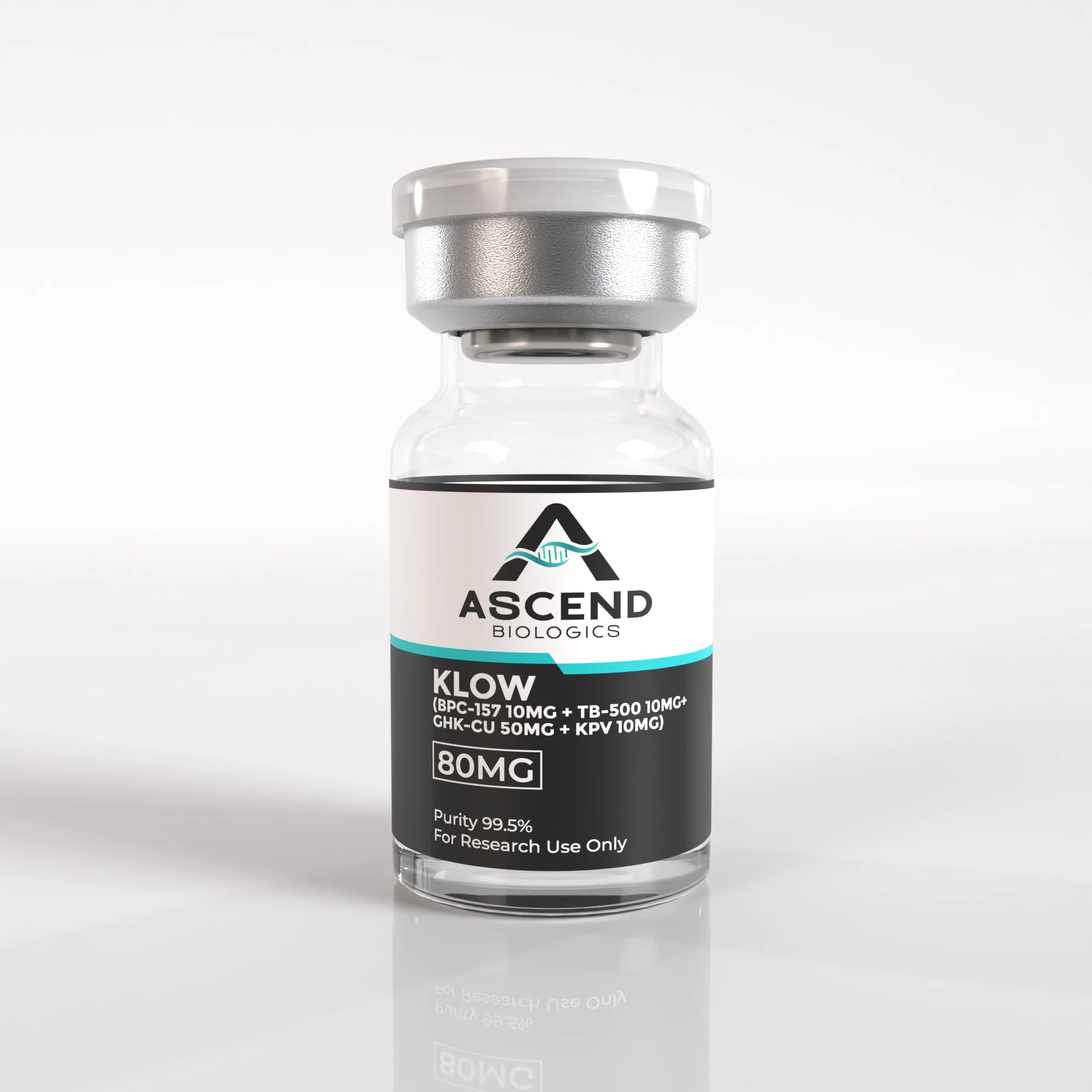

Klow 80MG
KL-OW is a synthetic peptide designed for research applications, intended for use in scientific studies related to molecular biology, pharmacology, and biochemical research. This product is not intended for therapeutic, diagnostic, or cosmetic use and should only be utilized in controlled academic or institutional settings under proper supervision and compliance with applicable regulations.
Research Context
KL-OW represents a peptide sequence developed for its potential interactions with specific cellular pathways, often studied in the context of protein-protein interactions, signal transduction, or receptor-ligand binding. Such peptides are commonly utilized in basic research to elucidate mechanisms underlying biological processes, particularly when exploring mechanisms of hormone action, gene expression regulation, or drug discovery research models. This product is provided as a tool for researchers to investigate molecular functions, but caution must be exercised due to its potential biological activity and variability in experimental outcomes.
Research Overview
KL-OW is categorized under a class of research chemicals that engage with endogenous biological systems through peptide-mediated mechanisms. It may be used in vitro or in vivo to probe functional aspects of signal transduction cascades, receptor binding affinities, or modulation of gene expression pathways. Researchers in fields such as neuroscience, endocrinology, and pharmacology may employ KL-OW to study its effects on target proteins, cellular responses, or downstream physiological effects under highly controlled experimental conditions. Due to its potential to interact with biological targets, this peptide should be handled with rigorous attention to safety and experimental design.
Key Research Focus Areas
- Signal Transduction Studies: Investigation of KL-OW’s role in modulating intracellular signaling pathways, including its potential effects on kinase activity, receptor activation, or second messenger production.
- Protein-Protein Interaction Analysis: Examination of KL-OW’s binding affinity and specificity towards target proteins, such as receptor tyrosine kinases, G-protein coupled receptors, or transcription factors, which may influence downstream cellular processes.
- Neurobiological Research: Exploration of KL-OW’s effects on neuronal signaling, synaptic plasticity, or modulation of neurotransmitter release, particularly in contexts such as neurodegenerative disease models or behavioral studies.
- Endocrine and Metabolic Studies: Evaluation of KL-OW’s impact on hormone signaling, glucose metabolism, or adipocyte function, relevant to metabolic syndrome, obesity research, or related pathologies.
- Drug Discovery and Pharmacology: Potential use as a lead compound or probe in the development of novel therapeutic agents, though this is strictly for research purposes and not intended for clinical application.
Safety and Compliance
KL-OW is provided solely for academic, institutional, or research purposes and must be used exclusively in accordance with established protocols within a research environment. Researchers are responsible for ensuring that this material is utilized in compliance with all applicable regulations, including but not limited to, those governing the handling of bioactive compounds, biological safety standards, and export controls. Proper documentation, labeling, and record-keeping are mandatory. Exposure to KL-OW should be conducted in a facility equipped with appropriate personal protective equipment (PPE), ventilation systems, and emergency protocols. Always consult with a qualified research scientist or toxicologist for guidance tailored to your specific experimental design and regulatory requirements.
For research use only. Not for human or animal consumption.


Reviews
There are no reviews yet.